A pruning cut is a wound a tree has to close, and how the cut is made decides whether it closes cleanly or becomes an entry point for decay. In Kannapolis yards, the difference between a good pruning job and a damaging one is usually visible from the ground once you know what to look for: where the cut sits, how the branch came off, and what time of year the work was done.
The method behind good work has a name, the three-cut method, and a simple rule: never cut flush. The seasons set the schedule around that method.
The collar is the whole point
At the base of every branch there is a slightly swollen ring of tissue called the branch collar. Inside that collar is the tree's chemical defense zone, the tissue that walls off a wound and grows the callus that rolls over a proper cut. A flush cut, sawn flat against the trunk, removes the collar and leaves a larger wound that the tree cannot close well. A stub left too long is the opposite error: the dead stub decays back toward the trunk before callus can cover it.
A correct cut sits just outside the collar, angled to shed water, small enough for the tree to seal in a season or two. On a well-pruned tree a year later you can see the donut of new wood forming evenly around each cut. On a flush-cut tree you see oval wounds that stay open, crack, and darken as decay gets started inside them.
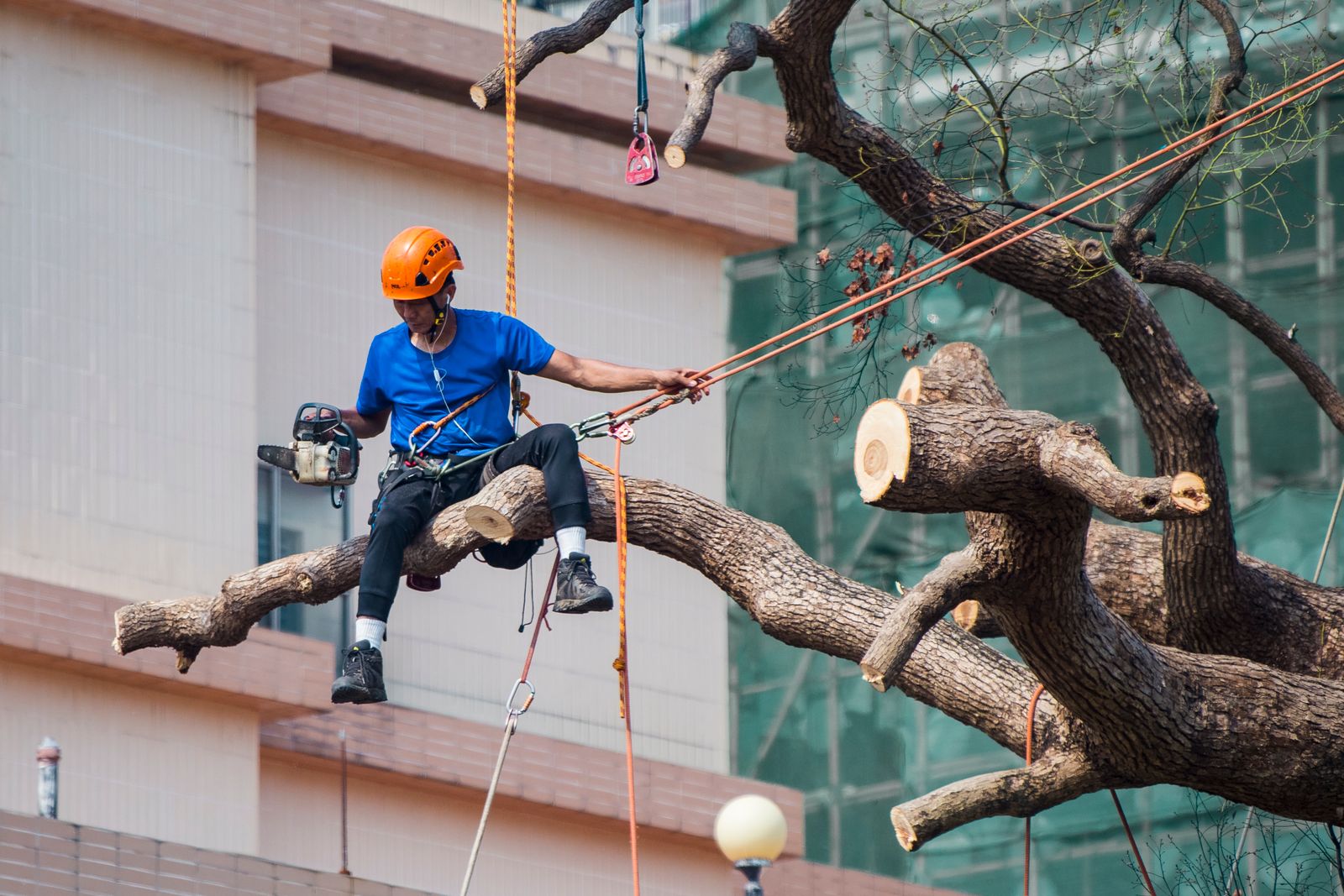
Seasonal pruning check for Piedmont trees
- Late winter, dormant season: The main pruning window. Structure is easy to see without leaves, cuts close fast with spring growth, and most disease pressure is low. Pass standard: major thinning and deadwood removal done here.
- Oaks, late winter only: Finish oak pruning well before spring. Fresh oak wounds in warm weather attract the insects that spread oak wilt.
- Spring: Limit work to storm damage and hazards. Fail sign: heavy thinning of a tree pushing new leaves, which spends stored energy the tree needs.
- Summer: Good for identifying deadwood, since dead branches stand out against full canopy, and for light corrective cuts. Mark the bigger work for winter.
- Fall: A reasonable second window for deadwood and clearance, once growth has hardened off. Avoid heavy cuts right before a freeze on tender species.
- Any season, three-cut check: Every branch too heavy to hold in one hand gets an undercut first, then a top cut outside it to drop the weight, then the final cut at the collar. Fail sign: bark torn down the trunk below a cut, which means the weight was never relieved.
Why the three cuts matter
A branch that is simply sawn from the top will not fall cleanly. Partway through, its own weight tears it free, and the tear runs down past the cut, stripping a tongue of bark off the trunk. That strip is a long, ragged wound far worse than the cut itself. The undercut, a shallow saw cut on the underside a short distance out from the trunk, stops any tear at that line. The second cut drops the branch safely beyond it. Only then, with the weight gone, does the climber make the short final cut at the collar, which is the cut the tree actually has to heal.
The sequence also explains why topping is so destructive by comparison. A topped branch is cut at an arbitrary point with no collar at all, so the tree cannot seal it, and the response is a burst of weak, fast sprouts anchored in decaying wood.
Checking work you hired out
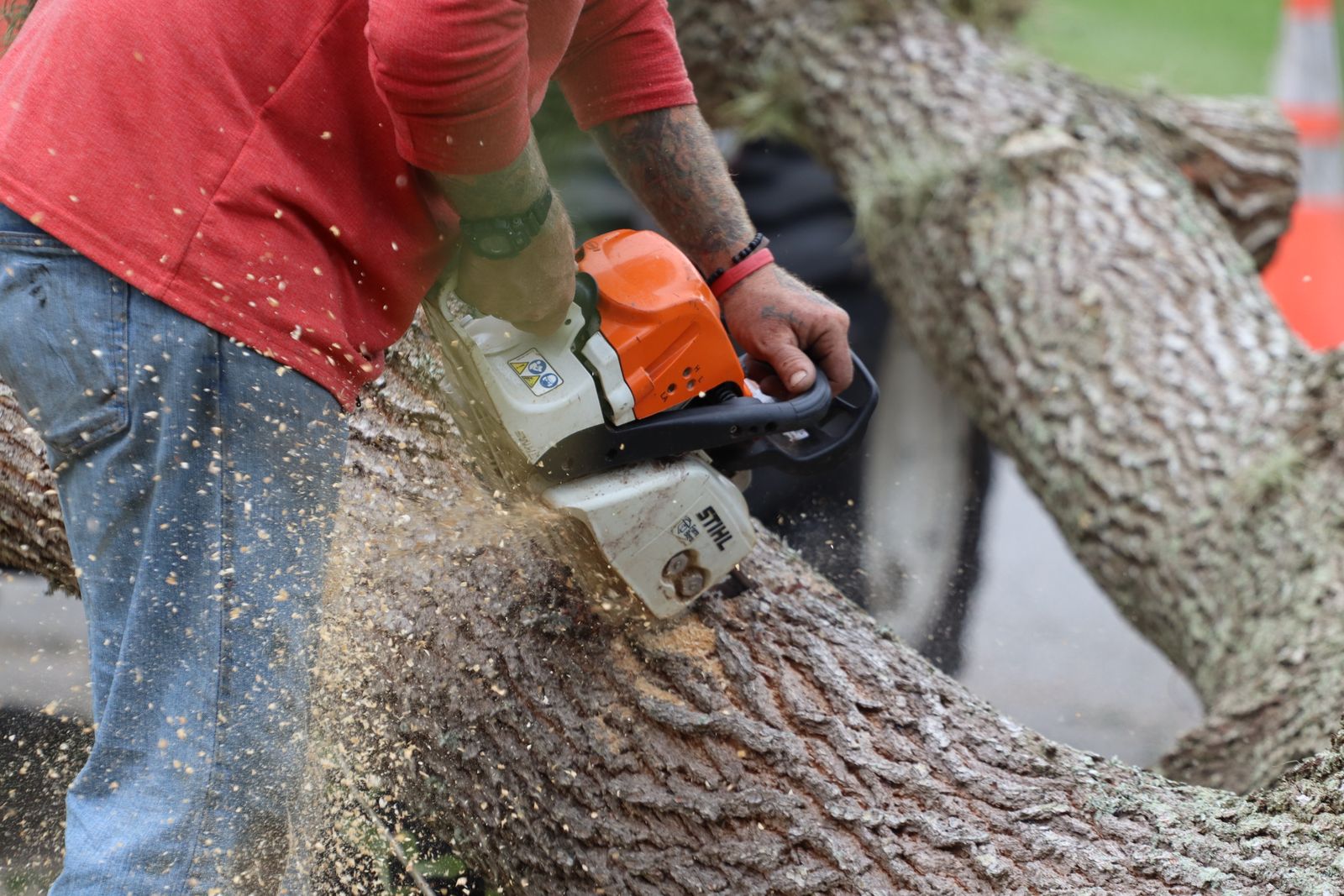
Walk the tree after a pruning job with three questions. Are the cuts just outside the collar, with no flush faces and no long stubs? Is there any torn bark below a cut? And did the canopy lose its problem branches without losing its shape? Tree trimming and pruning is a listed service at Carmona's Tree Services, and asking how cuts will be made, before the climber goes up, is a fair question with a clear right answer.
Common questions
Should pruning wounds be painted or sealed?
Generally no. Standard practice is to leave cuts open so the tree can close them naturally, since sealants can trap moisture against the wound. A few disease-specific exceptions exist, notably for oaks in wilt country.
How much of a tree can be pruned at once?
A common guide is to remove no more than about a quarter of the live canopy in a year, and less for an older or stressed tree. Over-thinning forces weak, fast regrowth.
What is the lion-tail mistake?
Stripping the inner branches and leaving foliage only at the branch tips. It shifts weight to the ends, raises breakage risk, and looks wrong from the street.
Photos in this guide are representative stock images.
← All guides from Carmona's Tree Services← Back to Carmona's Tree Services