The first two days after a storm in Kannapolis set the tone for everything that follows. A tree on a fence, a limb through a porch roof, or a trunk split down the middle all feel like emergencies of the same size. They are not. Some storm damage is dangerous in ways that are not obvious, some can wait a week safely, and telling them apart in the first 48 hours prevents both injuries and expensive second mistakes.
Storm work is widely regarded as the most dangerous kind of tree work, and the reason is stored energy. A bent limb, a hung-up top, and a root plate half-lifted out of the ground are all loaded springs made of wood, and they release without warning when cut in the wrong order.
The hazards that do not look like hazards
The limb hanging in the canopy, caught on other branches, has a name in the trade: a hanger. It may sit for days, then drop on a still morning when the wood dries and shifts. Split trunks are similar. A crack that opened in the wind can close and look minor at rest, while the tree's structure is already divided into two pieces leaning against each other.
Downed trees hide their tension. A trunk lying across a fence or another log is bent, and a saw cut at the wrong point lets the two ends snap apart or roll. Root plates are the quietest risk: a tree that leaned in the storm and settled back may have broken roots and loosened soil, leaving it ready to go over in the next moderate wind, days later, with no storm at all.
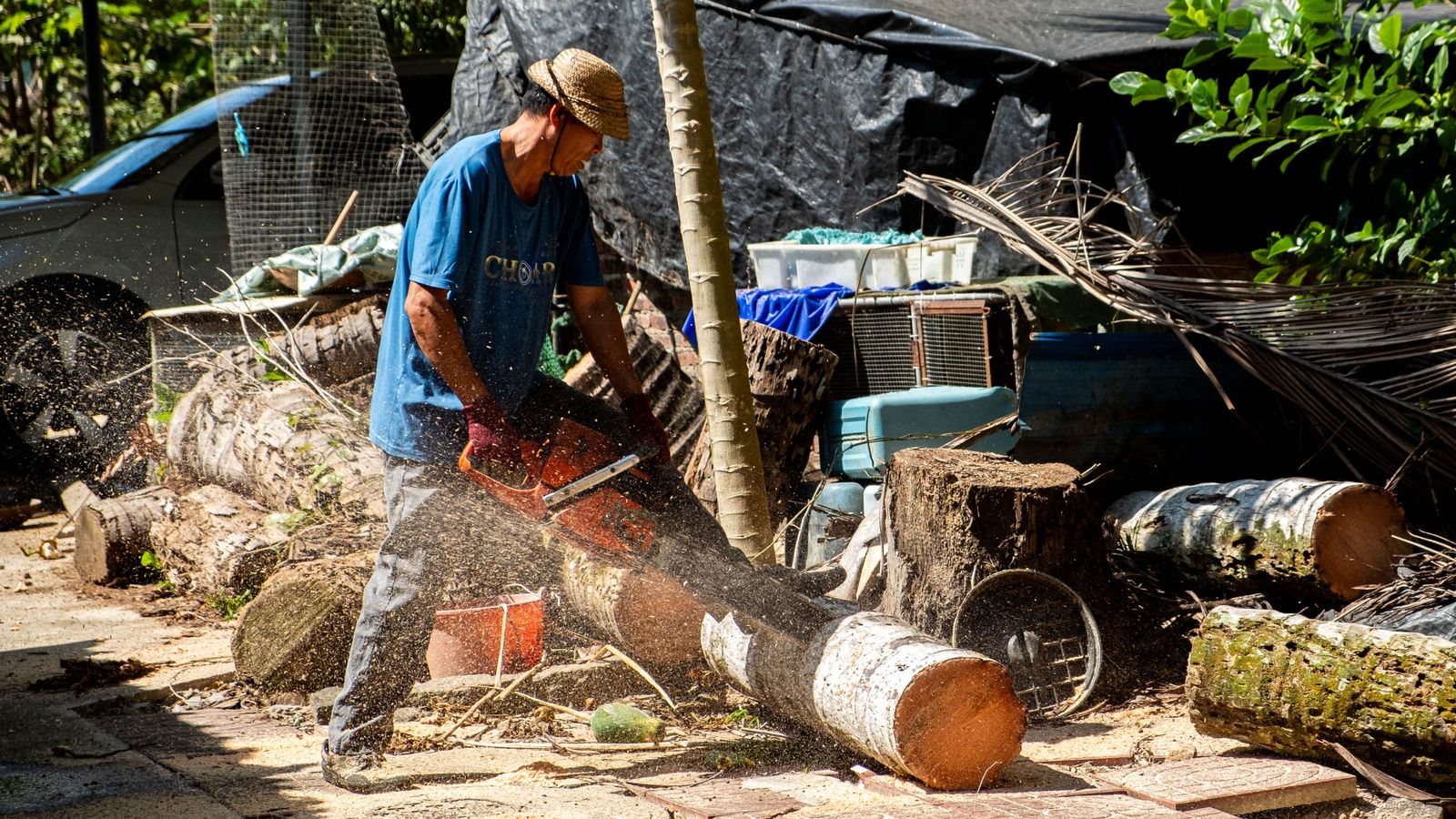
What to do in the first two days
Work in this order. First, distance: keep people and pets out from under any damaged canopy, and treat any line down or touching a tree as live until the utility says otherwise. Second, documentation: photograph every damaged tree from several angles, include the roof, fence, or driveway it hit, and note the date and time. Insurers and tree services both work better from that record than from memory a week later.
Third, triage with a phone call. Describe what is on a structure, what is hanging, and what is simply down in open yard. Crews after a storm sequence their work by danger and access, and clear information gets the dangerous jobs scheduled first. Fourth, resist the tidy-up instinct. Clearing brush and cutting firewood-sized pieces from a fully downed, relaxed tree in open ground is reasonable work. Anything hung, bent, split, or resting on a structure waits for a crew with ropes, rigging, and the training to read stored energy.
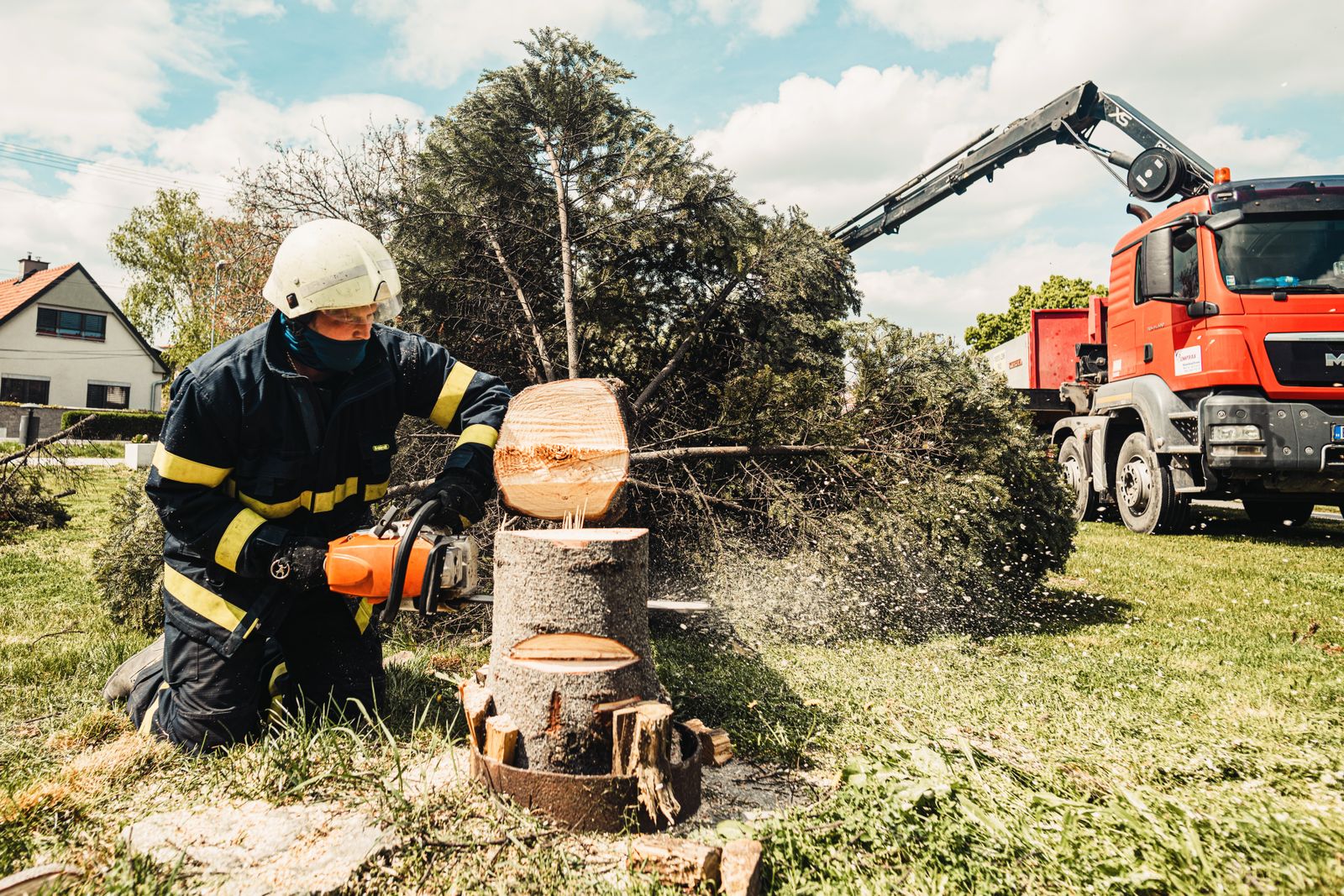
The cost of waiting on the wrong things
Delay has a direction with storm damage. A hanger over a walkway gets more likely to fall, not less, as the wood dries and shrinks around its catch points. A split trunk works wider with every breeze, and a tree that could have been cabled or reduced in week one is a removal by month two. Water entering a fresh split starts decay immediately, and a tarp-less hole in a roof edge where a limb punched through turns a tree bill into a tree bill plus interior water damage.
The opposite is also true: a downed tree lying flat in the back yard harms nothing by waiting for a calmer schedule. Storm cleanup and emergency service are listed at Carmona's Tree Services, and sorting the dangerous from the merely untidy is the core skill in the first 48 hours.
Common questions
A limb is hanging over my driveway but has not fallen. Can it wait?
No. Hangers are the classic delayed injury in storm cleanup, since they drop without wind or warning. Keep vehicles and people out from under it and get it assessed promptly.
Should I cut up a fallen tree that is bent over my fence?
Leave it for a crew. A bent trunk stores energy that releases as the cut finishes, and the ends can kick or roll in directions that are hard to predict.
Who pays when my tree falls on a neighbor's property?
In general, where the tree lands tends to decide whose insurer responds, unless neglect was documented beforehand. Photograph everything and let the insurers sort it out.
Photos in this guide are representative stock images.
← All guides from Carmona's Tree Services← Back to Carmona's Tree Services