When a tree comes down in Kannapolis, the stump stays behind, and the question of grinding it or leaving it tends to get answered by default. The stump is easy to ignore in the first month. The real differences between the two choices show up across a calendar: what sprouts in spring, what settles in summer, and what the spot looks like two years on.
Grinding removes the stump and the surface roots around it to below ground level, turning the wood into mulch-like chips. Leaving the stump keeps it as a slow-decaying fixture. Neither is wrong in every yard, but they lead to very different years.
What grinding actually does
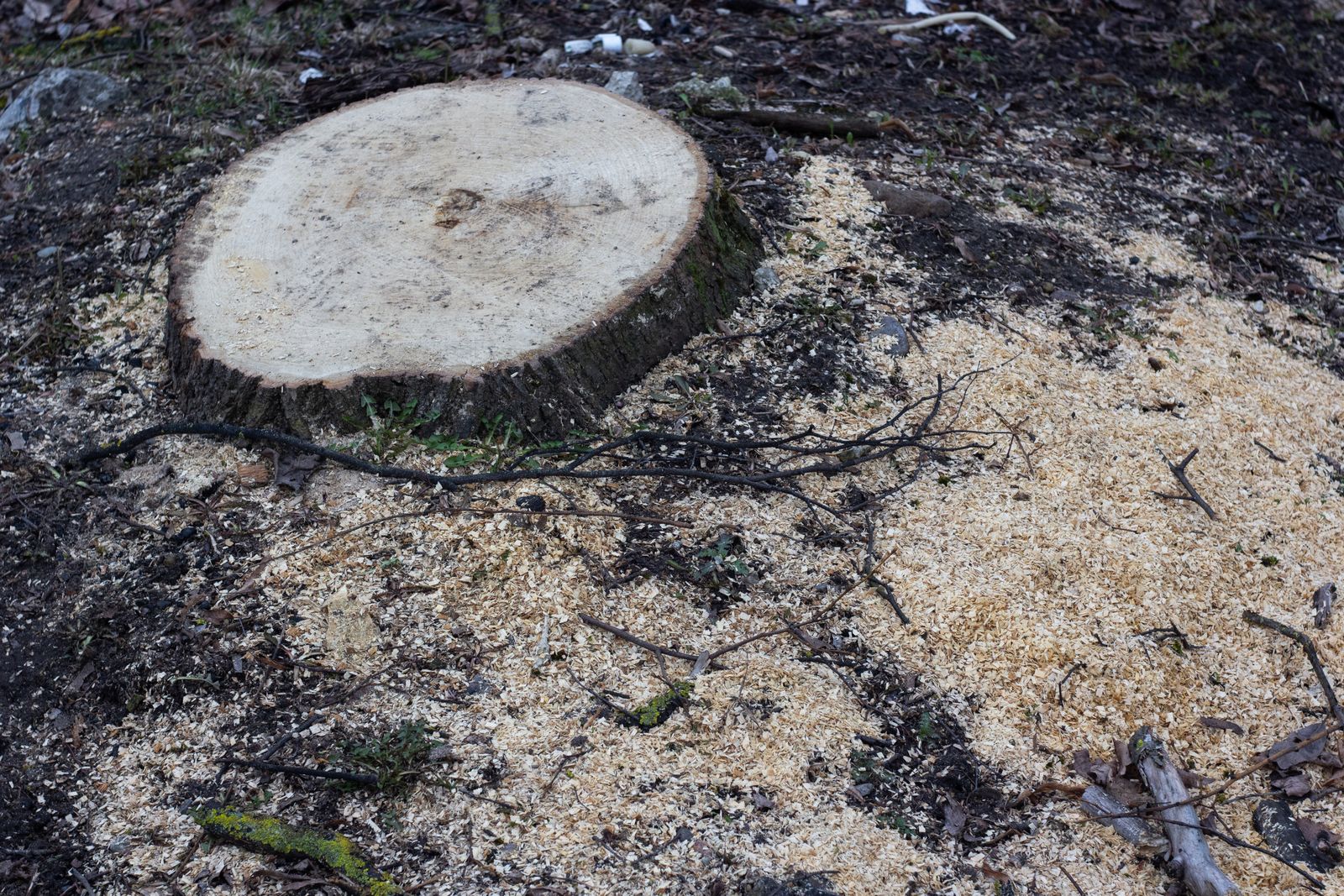
A stump grinder chews the wood down, commonly six to eight inches below the soil surface for a standard grind, and deeper when a planting or a patio is planned for the spot. The large surface roots near the stump get ground along with it. What remains underground, the deeper root system, stays and decays slowly over years, which is normal and mostly harmless away from structures.
The hole left behind gets backfilled largely with the grindings themselves, mixed with soil. That fill settles as the chips break down, so a shallow refill a few months later is part of the normal sequence, not a sign the job was done poorly. Grass seed goes down once the spot is topped up and leveled, ideally in the fall window when Piedmont lawns establish best.
| When | If you ground the stump | If you left the stump |
|---|---|---|
| First month | Chips settle; spot looks like a mulched circle | Stump sits clean-cut; easy to forget about |
| First spring | Top up the settled fill and seed or sod the spot | Many species send up vigorous sprouts, called suckers, from the stump and roots |
| First summer | New grass needs water through the heat like any new lawn area | Sprouts need repeated cutting; the stump starts hosting insects as the wood softens |
| Year two | Spot is lawn again; deep roots decay quietly below | Fungal growth often appears; the stump softens, crumbles at the edges, and can become a tripping edge in the turf |
| Years three to five | Little sign remains beyond a slight dip if fill was never topped up | Decay continues unevenly; a hollow or a sink spot can form as the heart of the stump goes |
The case for leaving a stump, honestly made
There are yards where leaving the stump is fine. A stump in a back woodland edge, away from mowing and play, decays into habitat and causes no trouble beyond sprouts you can cut on a walk. A stump planned as a planter or a stand for a birdbath has a job. And when several large trees come down at once, grinding every stump in the same visit is a scheduling choice some owners split across seasons for practical reasons.
The case against leaving one in a front or side lawn is mostly the calendar above. Sprouting species, and the Piedmont has many, from oaks to sweetgums to crepe myrtles, treat a cut stump as an instruction to regrow. Those sprouts draw on a full root system, so they grow fast and return after cutting, for years. Add a mower obstacle, a wasp-friendly decaying edge, and a soft spot that worsens slowly, and most lawn stumps end up ground eventually anyway, after several seasons of being worked around.
Roots, regrowth, and the next planting
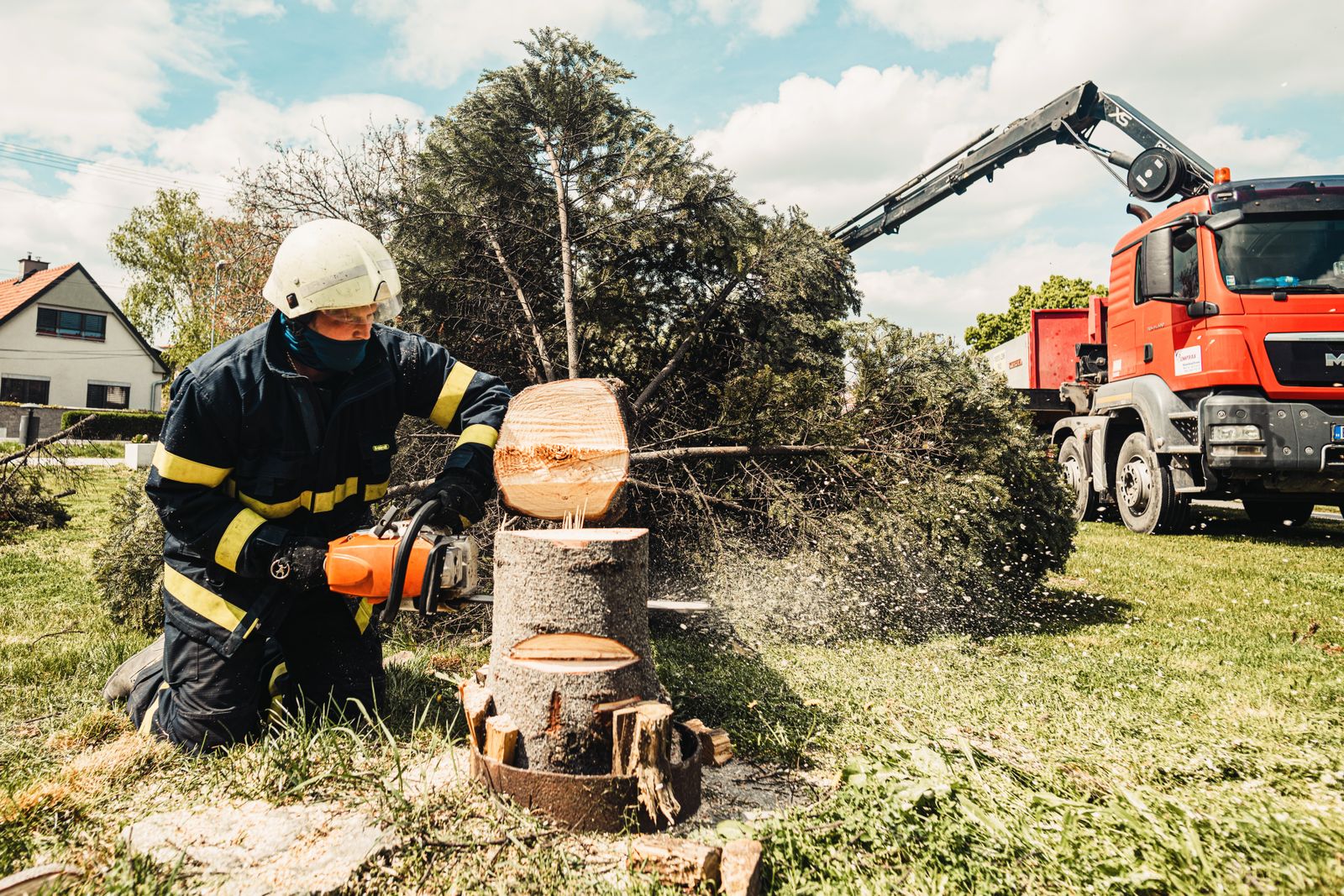
One expectation to set straight: grinding does not remove the whole root system, and planting a new tree in the exact old spot is still poor practice. Old roots and grinding residue make the soil uneven for a young tree. Shift a replacement planting several feet to the side, where it gets fresh soil and room. Stump grinding is among the services listed by Carmona's Tree Services, and saying at estimate time whether the spot is headed for lawn, a bed, or a patio gets you the right grind depth the first time.
Either way, decide on purpose. A stump kept by choice, with a plan for its sprouts and its slow decay, is a different thing from a stump kept by default.
Common questions
How deep does stump grinding go?
A standard grind commonly runs six to eight inches below grade, with deeper grinding available where planting or hardscape is planned. Tell the crew the plan for the spot in advance.
Will a ground stump still sprout?
Most sprouting comes from the stump and surface roots, which grinding removes. Occasional sprouts from deeper roots can appear and usually fade once cut a few times.
Can I burn a stump out instead?
Burning is slow, unreliable in green or damp wood, and restricted in many areas. It also leaves the root problem untouched, so grinding remains the standard answer.
Photos in this guide are representative stock images.
← All guides from Carmona's Tree Services← Back to Carmona's Tree Services