Most tree removal decisions in Kannapolis are not really about the tree. They are about risk, timing, and what the tree is doing to everything around it. A healthy tree in the wrong place, a declining tree over a roof, and a dead tree in the back corner are three different problems, and they do not get the same answer.
A proper assessment walk looks at the whole situation in a set order: the tree's health, its structure, what it can hit, and what changes if you wait. That walk, not a glance from the driveway, is how the decision gets made well.
Reading health before structure
Start with the canopy. A tree that leafs out thinly, drops leaves early, or carries a lot of dead twigs at the tips is telling you its root system or its internal wood is compromised. Mushrooms at the base, deep cracks in the trunk, peeling bark over bare wood, and a hollow sound when the trunk is struck are stronger signals still. None of these alone condemns a tree, but two or three together change the conversation.
Then look at structure. Old pruning wounds that never closed, included bark where two trunks press together, a lean that has changed, and roots lifting on one side all describe how a tree is likely to fail, which matters more than whether it might. A tree rarely falls over whole; it sheds the part its structure could no longer hold, usually in a storm, at night, onto whatever is underneath.
| Situation found on the walk | Usual recommendation | Why | Cost of waiting |
|---|---|---|---|
| Dead tree, any location | Remove on a planned schedule | Dead wood gets brittle and unpredictable; climbers cannot trust it | Removal gets harder and riskier as the wood decays |
| Declining tree over a roof or driveway | Remove, or reduce and monitor for a set period | The target underneath decides the urgency | Each storm tests structure that is not recovering |
| Healthy tree, wrong place | Remove while it is still a manageable size | Roots, shade, or growth habit conflict with the house or lines | A bigger tree is a bigger, more complex removal later |
| Storm-split or cracked trunk | Prompt assessment; often removal | A split trunk has lost the strength that kept it standing | The crack works wider with every wind load |
| Healthy tree, room to grow | Keep, prune on a cycle | Sound structure and no target conflict | Skipped pruning cycles let small defects grow |
The target question
Arborists talk about targets: anything a falling tree or limb can land on. A declining oak over an empty back lot and the same oak over a bedroom roof are not the same risk, and honest advice treats them differently. In Kannapolis neighborhoods, the common targets are roofs, fences, driveways, play sets, and the neighbor's property, which adds a second household to the decision.
Distance and direction matter as much as condition. A lean toward open yard with sound wood may be worth watching. A lean toward the house with soil heaving at the base is not a watch-and-see case. The walk should end with someone able to say, in plain terms, what is likely to fail, where it would land, and how soon it needs an answer.
Removal, reduction, or monitoring
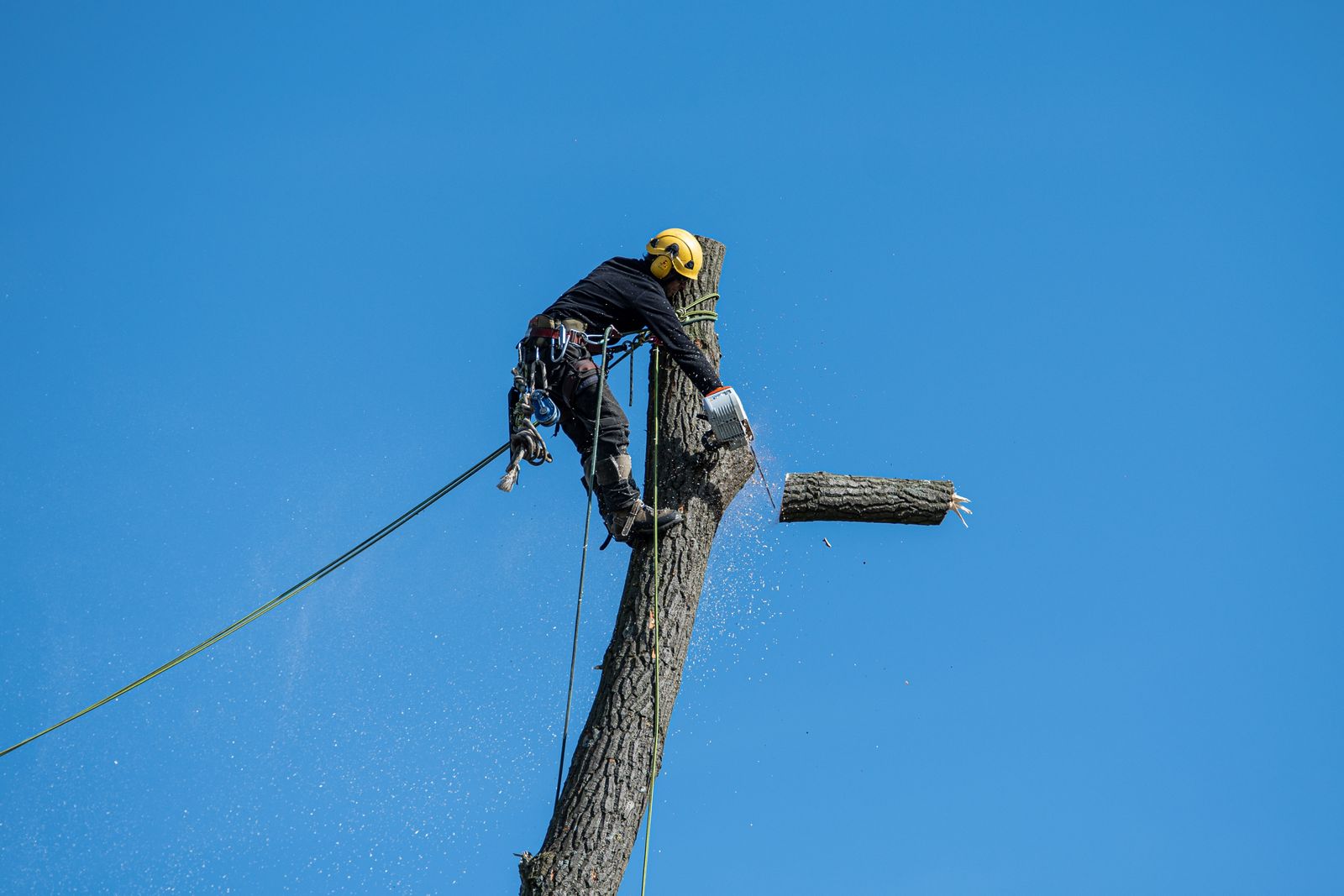
Removal is one option of three. Crown reduction by a skilled climber can lower wind load and buy years for a tree with life left in it. Monitoring, with a written note of what was seen and a date to look again, is a real plan for a borderline tree with no serious target. What is not a plan is noticing dead limbs over the driveway every summer and doing nothing until one lands on a car.
Tree removal, trimming and pruning, and storm cleanup are the services listed by Carmona's Tree Services, and a free estimate visit is the natural setting for this walk. Bring your own observations to it: when the lean changed, which limbs dropped, and where the mushrooms appeared are details that sharpen any assessment.
Common questions
Can a declining tree recover on its own?
Occasionally, after a single stress such as drought, a tree rebounds. Progressive decline across several seasons, with dead wood increasing each year, rarely reverses.
Do I need a permit to remove a tree on my own lot?
Rules vary by location and sometimes by neighborhood covenants. Check your local requirements before scheduling, especially for trees near a street or property line.
Is it cheaper to remove a tree in winter?
Scheduling is often easier in the dormant season and the work can be cleaner with leaves off. The condition of the tree, not the season, should set the timing for a risky one.
Photos in this guide are representative stock images.
← All guides from Carmona's Tree Services← Back to Carmona's Tree Services